
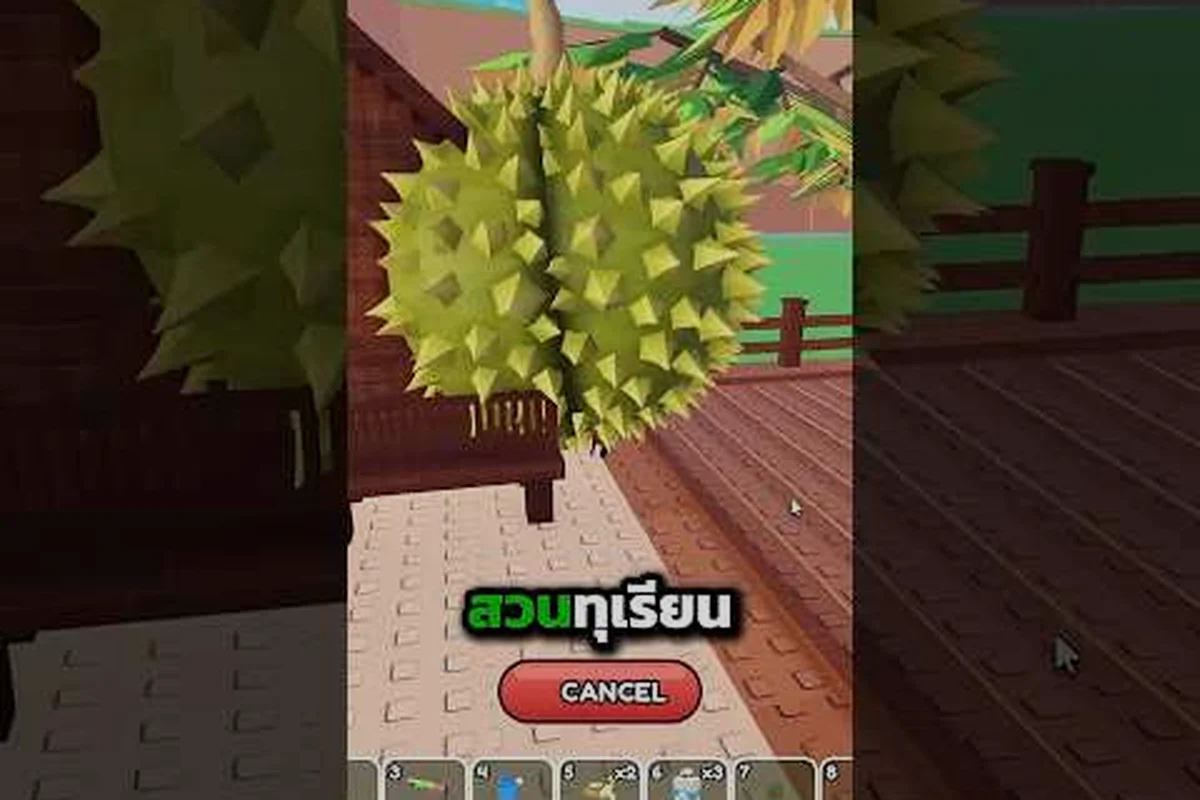
Durian garden solo play matters because its farming loop rewards steady, independent routines rather than team coordination. For a PC player, checking the client’s controls, display settings, and connection quality before planting your first durian tree can prevent avoidable crop-care mistakes; on the server side, note how fruit growth, harvesting windows, and crop selling update so you can plan visits around the game’s cycle.
Durian Garden Solo Setup for PC
Starting Durian Garden on PC requires the Roblox client or the official Roblox web application, plus a stable internet connection and a keyboard-and-mouse setup that Roblox supports. The verified PRIMKUNG channel and game listing identifies the title as a Roblox simulation and tycoon game from Mini Richy In Game Groups, so PC players are not entering a separate native edition.
The core loop is refreshingly direct: plant durian trees, accelerate their growth, collect fruit, load a truck, and sell the harvest for cash. You then reinvest that cash into land, upgrades, and larger plots. A broad beginner guide to Durian Garden can help with the first farming steps, but this guide focuses on making those steps practical for one player.
Essential PC Requirements
There are no verified minimum processor, graphics card, or memory specifications in the supplied game data, so avoid treating unofficial hardware estimates as confirmed requirements. The practical requirement is a device that runs Roblox smoothly, maintains a reliable connection, and supports keyboard-and-mouse controls.
| PC consideration | What to verify | Solo impact |
|---|---|---|
| Platform | Roblox client or Roblox website access | Supports standard PC play without another player |
| Connection | Stable download and upload speeds | Reduces delays during planting and selling |
| Controls | Keyboard and mouse support | Makes plot selection and menu navigation predictable |
| Display | Resolution that keeps menus readable | Improves speed when checking prices and upgrades |
| Audio | Optional but useful | Can provide feedback for game prompts |
A stable connection matters more than a high-end specification because the farming cycle involves repeated inputs across several menus. Close unnecessary downloads, use wired Ethernet when available, and avoid running demanding applications at the same time if that affects frame rate.
Installation and Account Checklist
Before checking your first crop cycle, confirm that the Durian Garden Solo client launches through the verified Roblox experience and that your PC’s keyboard-and-mouse controls register reliably; this separates a control or connection issue from genuine growth problems. Test the planting interface in an empty plot first, then watch the tree’s growth timer, harvest prompt, truck-loading interaction, and sell action in sequence. If those stages work, you can diagnose whether a delay comes from the selected upgrade, the active server, or your own setup.
- Create or sign into your Roblox account.
- Open the game through the verified Roblox experience.
- Confirm that keyboard-and-mouse controls respond correctly.
- Enter a plot and locate the planting interface.
- Plant one tree before buying multiple trees or unlocking land.
- Learn where growth acceleration, harvesting, truck loading, and selling appear.
- Purchase the first meaningful upgrade only after completing one full crop cycle.
This short checklist prevents the common mistake of spending cash before understanding the complete production cycle. It also creates a baseline: if one tree works correctly, any later delay probably comes from the selected upgrade or server rather than your controls.
Is PC the Right Choice for Solo Play?
PC is a strong fit for Durian Garden solo because keyboard-and-mouse input supports fast menu navigation, while the Roblox client makes session management simple. It also lets you keep the game running in a separate window if you need to check game information, provided background settings do not cause input or performance problems.
| Consideration | PC experience | Main advantage |
|---|---|---|
| Menu navigation | Keyboard and mouse | Faster repeated farming inputs |
| Account access | Roblox client or browser | Flexible launch options |
| Learning curve | Low once controls are checked | Clearer control of plot management |
| Hardware demand | Roblox client performance | Stable play on suitable PCs |
| Solo focus | Entirely player-managed | No need to recruit teammates |
A short test session is enough to confirm compatibility, but treat the test as a complete solo farming loop rather than a quick login check: plant one durian tree, complete its growth cycle, harvest the fruit, and sell the produce through the in-game market. Note each stage for input lag, lost actions, or stalls, especially when using the Roblox client on PC; if background operation causes problems, reduce graphics settings or run the game in the foreground before committing to a longer durian garden solo session.
Durian Garden Servers and Eight-Player Capacity
Durian garden servers can hold up to eight players, according to platform data verified on November 1, 2026. That capacity does not mean you need a group to succeed. Each player can run the planting, growth, harvest, loading, and selling cycle independently, although a shared server may create congestion around popular facilities.
The same verified listing reported 9,435,299 visits, 31,127 players online, and 9,721 favorites on that date. These figures are a snapshot rather than permanent totals, but they indicate that Durian Garden had substantial concurrent interest when the data was checked. As a result, joining at a busy time may produce full or partially occupied servers.
Choosing a Busy or Quiet Server
Solo players generally want a quiet server because fewer simultaneous interactions mean less waiting and a cleaner routine. Busy servers may still be worthwhile if they are easier to access, but the eight-player cap can make facilities feel crowded. Use the in-game server list when available and prefer servers with free space.
| Server condition | Likely benefit | Likely drawback |
|---|---|---|
| Quiet server | Faster individual actions | Fewer people visible |
| Partly occupied server | Moderate activity without maximum congestion | Some shared-area delays |
| Busy server | Lively atmosphere | More competition for facilities |
| Full server | Immediate access attempt | Queueing or joining restrictions may occur |
Server choice should support efficiency, not prestige. A full server with eight people does not offer eight times the production of one player, while a quieter instance can make the same cycle easier to manage. If specific features such as workers or shared upgrades matter later, compare them with the farm progression and expansion guide before buying.
Why Eight Players Still Works for One Farmer
The economy depends on repeated production rather than simultaneous group actions. A solo player can prepare one patch, collect ripe fruit, move the harvest to the truck, and sell it while the next trees continue growing. This creates a pipeline in which one activity proceeds while another part of the farm remains available for work.
That routine is especially effective when the upgrades shorten waiting periods. Faster growth reduces idle gaps, larger truck capacity reduces repeated loading, and additional plots increase potential output. However, the right upgrade depends on the bottleneck you actually encounter, which is why solo farming should be measured rather than optimized blindly.
Server Checklist Before a Farming Session
Enter the server and spend a minute observing its activity before beginning, since a busy solo server can expose you to shared-machine queues, crowded planting areas, and sudden competition for the same growth-boost station. Watch how other players move between plots, note which interactions remain responsive, and choose a starting point that lets you farm without repeatedly interrupting someone else. This brief observation can prevent wasted harvests and help you identify whether a quieter server is worth switching to later.
- Check whether another player is occupying your intended planting area.
- Identify the nearest available growth-boost station.
- Learn where the truck and selling point appear.
- Watch for temporary congestion at shared machines.
- Keep a simple route through your plot.
- Recheck the server list if interactions repeatedly stall.
In a busy server, repeated interruptions around the growth-boost station can make a planting loop inefficient: if another player repeatedly occupies the same interaction point, the delay may compound across watering, harvesting, and selling rather than affecting only one action. In that situation, switching servers can be faster than rerouting around the obstruction, especially when the current server’s shared-machine congestion keeps the growth-boost station, truck, or selling point unavailable. Compare the delay with the travel time of opening another server before abandoning the route; a small server change can preserve the farming session’s momentum if the new server has a responsive station and fewer competing players.
Durian Garden Solo Farming Routine
A dependable durian garden solo routine depends on smooth transitions between growth management, harvesting, truck loading, and selling. The goal is not to click as quickly as possible; it is to keep fruit from becoming the limiting factor. Start with one tree, learn every prompt, and add capacity only after the first complete sale succeeds.
The verified game listing describes a recurring cycle of planting, boosting growth, harvesting, loading a truck, and selling for cash. This gives solo players a straightforward sequence to repeat, and community experience suggests that the same pattern supports independent farming without relying on other players. The money strategy for balancing farm income can help you decide where reinvestment should go after this foundation is stable.
Each Cycle Ends With a Completed Sale
Each cycle should end with a completed sale rather than merely a pile of fruit in inventory. That distinction makes the route from seed to cash measurable: after planting, growth, harvesting, and truck loading, the cash awarded at the selling interaction reveals whether the cycle actually produced a return. For example, if one harvested durian remains in inventory but no sale is completed, it is still working stock rather than profit; tracking the sale also shows how much cash is available for reinvestment in upgrades or expansion.
| Stage | Solo action | Result to verify |
|---|---|---|
| Planting | Place a tree in available soil | A growing tree appears |
| Growth | Use any available boost | Fruit reaches harvest readiness |
| Harvest | Collect mature fruit | Fruit enters inventory or collection area |
| Truck loading | Move harvest into the vehicle | A fuller truck load is ready |
| Selling | Complete the sale interaction | Cash is awarded |
| Reinvestment | Buy an upgrade or expansion | The next cycle becomes more efficient |
The first full cycle is a diagnostic milestone because it tests the entire solo production chain on your PC setup: planting a tree in available soil, applying a growth boost, harvesting mature fruit, loading the truck, and completing the selling interaction. For example, if fruit reaches harvest readiness but the truck remains empty, the failure is in the loading step; if the truck fills but no cash is awarded, troubleshoot selling before buying unrelated land or decorations. This stage-by-stage check identifies the exact bottleneck, while reinvesting the resulting cash in an upgrade or expansion can make the next cycle more efficient.
Build a Repeatable Route
Once the cycle is stable, establish a fixed route. Begin at the trees farthest along in their growth, move toward the nearest harvestable fruit, then visit the growth-boost station and truck in the most convenient order. Consistency reduces backtracking and makes the routine easier to perform under time pressure.
A good route also helps you spot bottlenecks. If you repeatedly walk between distant plots while waiting for fruit, acquire more land before buying a decorative item. If the truck fills before all trees are harvested, increase carrying capacity. If fruit is ready but no selling opportunity exists, investigate server congestion or a required sale location.
Session Lengths That Fit a Solo Schedule
Durian Garden's growth cycle makes short sessions practical, although longer sessions can be more efficient when upgrades are ready. Players should avoid treating a long session as automatically better; the useful length is the period during which there is always a productive task waiting.
| Session type | Best use | Recommended focus |
|---|---|---|
| Short check-in | Collect ripe fruit and sell | Finish one full harvest-and-sale cycle |
| Medium session | Plant, boost, harvest, and reinvest | Keep the truck active and buy one useful upgrade |
| Long session | Manage expanded land | Test the route, improve capacity, and prevent idle growth |
The best session length is the one that still fits your schedule. A 10-minute check-in can be more valuable than an unattended hour because it turns mature fruit into cash before another player or reset-related delay reduces its usefulness.
Durian Garden Review: Strengths and Early Weaknesses
This durian garden review focuses on the experience available from the supplied platform data and the documented farming loop. Durian Garden had nearly 9.4 million visits and more than 31,000 concurrent players on November 1, 2026, suggesting meaningful popularity. Its low-friction farming cycle is approachable for solo players, while busy servers and an eight-player capacity can complicate direct access to shared facilities.
This is a young release. The official listing places its launch on October 21, 2026, and the build carried an [UPD] prefix, which indicates active iteration. That age matters when evaluating features: menus, balances, server behavior, and upgrade details may change. The broader gameplay review of Durian Garden provides useful context on how group-oriented play compares with independent farming.
What Works Well for Solo Players
The production loop has an understandable cause-and-effect structure. Planting creates a tree, growth acceleration produces ripe fruit, harvesting fills the truck, and selling converts that workload into money. Because each step leads directly to the next, a new player can learn through action rather than memorizing a large collection of unrelated systems.
Solo play also allows full control over timing. Instead of waiting for a group to finish an activity, you can collect ripe fruit, move to the truck, and sell on your own schedule. Low coordination pressure is the clearest advantage, especially when the server is not crowded.
Where the Experience Can Feel Less Polished
The game’s popularity creates a natural trade-off between access and comfort. A server with eight players may feel lively, but the shared layout can create interference around important stations. A quieter server provides better control, though finding one may require checking the list more often.
The [UPD] build marker is another reason to verify current mechanics before making a large purchase. Platform figures are a dated snapshot, and a young tycoon game may change server capacity, progression pacing, or upgrade effects. Treat the supplied numbers as verified on November 1, 2026, not as permanent rules.
Is Durian Garden Worth Playing Solo?
Yes, if you enjoy a clean production loop and prefer building efficiency without coordinating a team. The game’s subject matter, selling process, and repeated crop cycle provide enough short-term feedback for solo sessions, while land and upgrades create longer-term goals.
| Player preference | Solo suitability | Reason |
|---|---|---|
| Enjoy tycoon progression | Strong | Cash can be reinvested into land and upgrades |
| Prefer independent sessions | Strong | No team schedule is required |
| Enjoy social competition | Moderate | Busy servers add interaction but may create congestion |
| Want highly polished systems | Uncertain | The release is new and receiving updates |
| Need strict offline progression | Limited | Farming depends on active sessions |
The free-to-play access model makes trying the game straightforward, although this review does not claim that every upgrade or plot can be acquired without time. A player who enjoys repeated harvesting and visible improvement will likely find the loop satisfying.
PC Farming Upgrades and Solo Expansion
Expansion should follow measurement rather than a fixed shopping list. If fruit waits too long, prioritize growth; if the truck cannot carry a full harvest, prioritize capacity; if movement dominates the session, buy closer or additional land. This approach turns a durian garden guide pc checklist into a practical decision system rather than a list of expensive distractions.
For broader upgrade context, compare the expansion order and worker options with what your current bottleneck requires. The goal of solo expansion is to reduce waiting and unnecessary movement while preserving enough depth that later goals remain meaningful.
Diagnose Before Buying
Track three numbers during a normal session: the time between planting and harvest, the number of loading trips, and the number of unused spaces you pass during the route. These observations reveal whether growth, capacity, or layout is the real limitation.
| Observed problem | Likely bottleneck | Upgrade category to inspect |
|---|---|---|
| Trees remain unripe for long stretches | Growth speed | Growth acceleration |
| Truck fills before the harvest ends | Carrying capacity | Truck capacity |
| Frequent long walks between plots | Layout and land density | Land expansion |
| Plenty of cash but little extra output | Production capacity | Workers or parallel production |
| Manual tasks consume most of the session | Labor efficiency | Automation or worker features |
The first expansion purchase should address the strongest recurring problem. Buying land while your truck remains half empty adds routes without improving cash flow, and buying a growth upgrade while harvest capacity is low merely creates more ripe fruit that you cannot move efficiently.
Priority Sequence for New Solo Players
A sensible progression order is to complete one planting, harvesting, loading, and selling cycle; buy the first growth improvement; secure a reliable truck capacity upgrade; expand land only when nearby space becomes restrictive; and test worker features after the manual route is understood.
This sequence protects cash during the uncertain early stage. The first sale proves that the route works, while a growth improvement increases output from the same plot. Capacity comes next because additional fruit is useful only when it can be carried and sold efficiently.
A Simple Efficiency Scorecard
Use a weekly or multi-session scorecard rather than judging an upgrade from one harvest. Record fruit sold per session, empty truck trips, idle time, route length, and money spent across the same duration—for example, compare five sessions before and after buying a faster loading upgrade. If sales rise but route length, truck trips, or idle time also increase, the change may only add management work; the useful upgrade is the one that improves output while keeping the durian garden solo routine manageable.
| Metric | Before upgrade | After upgrade | Desired result |
|---|---|---|---|
| Fruit sold per session | Record baseline | Record new total | Higher |
| Empty truck trips | Count trips | Count trips | Fewer |
| Money spent | Starting balance | Total cost | Controlled |
| Idle time | Estimate gaps | Estimate gaps | Reduced |
| Route length | Observe movement | Observe movement | Shortened |
A measured improvement is more reliable than a dramatic visual change in durian garden solo. For example, if a faster loading upgrade raises fruit sold from 120 to 135 per session but adds two empty truck trips, compare the extra 15 sales against the added route length and fuel cost before declaring it worthwhile. Keep the scorecard simple, because a complex spreadsheet can defeat the relaxed farming routine that makes the game approachable; five comparable sessions are usually more informative than a single harvest, especially when checking whether sales gains reduce idle time rather than merely create more loading and driving.
Common Durian Garden Solo Mistakes
Most mistakes come from spending before testing, ignoring server congestion, or treating the eight-player limit like a group requirement. Avoiding those errors makes durian garden solo sessions more predictable. The game is designed around recurring farm actions, so even small corrections—using a quieter server, planning a route, or buying capacity before land—can compound over multiple harvests.
Spending All Cash Too Early
New players often interpret a large cash balance as permission to buy everything at once. The better approach is to preserve a reserve until the full production cycle is stable. That reserve gives you room to replace a mistaken purchase or respond to a sudden need for truck capacity.
Ignoring the Truck Bottleneck
More trees are not automatically more money. If the truck cannot hold the harvest, you must make repeated loading trips, collect partially ripe fruit, or waste time returning to the same location. Solve this bottleneck before expanding the farm. Capacity before acreage keeps each harvest moving cleanly toward the sale point.
Staying on a Crowded Server
A busy server may have a short queue, but it can also bring constant movement around shared stations. If another player repeatedly occupies the same interaction point, leave and select a quieter server. Solo efficiency matters more than proving you can remain in the busiest instance.
Multitasking Beyond Roblox
Playing Durian Garden while running a demanding desktop workload can cause stutter, missed inputs, or a delayed sale. Even a powerful PC can struggle if Roblox is not the priority. Keep the operating system uncluttered and close heavy applications before beginning a long farming session.
Resetting or Rebuilding Too Often
Routine improvement comes from adding one adjustment at a time. If you change land, growth speed, truck capacity, and worker settings simultaneously, you cannot identify which change produced the result. Keep one variable active, farm for several cycles, and then compare the scorecard.
Frequently Asked Questions
Can you play Durian Garden solo?
Yes. Durian Garden supports solo farming because planting, growth boosting, harvesting, truck loading, and selling can all be managed independently. Servers hold up to eight players, but you do not need a full group. A quiet server is usually best because shared facilities are less likely to be crowded.
How many players can a Durian Garden server hold?
The verified platform data lists a server limit of eight players. Because that figure was captured on November 1, 2026, it may change as the developer updates the game. Treat the eight-player value as the verified reference for this version, and check the current server list before planning group activities.
Is Durian Garden good on PC?
Durian Garden is a Roblox simulation and tycoon game, so PC players use the Roblox client or web access rather than a separate native release. The farming controls suit keyboard-and-mouse play, although you should confirm that your device runs Roblox smoothly and completes a planting-to-sale cycle without input delays.
Should solo players join busy servers?
Busy servers can feel more social, but the eight-player cap may lead to congestion around shared stations. Choose a quiet or partly occupied server for smoother harvesting, boosting, and selling. If your preferred server is full, check whether another instance is available before queuing repeatedly.
What should a new solo player buy first?
Complete one full harvest-and-sale cycle before making a major purchase. Then address the clearest bottleneck: growth speed when fruit ripens too slowly, truck capacity when harvests repeatedly overflow, or additional land when nearby plots are consistently occupied. This approach preserves cash and makes each upgrade measurable.