
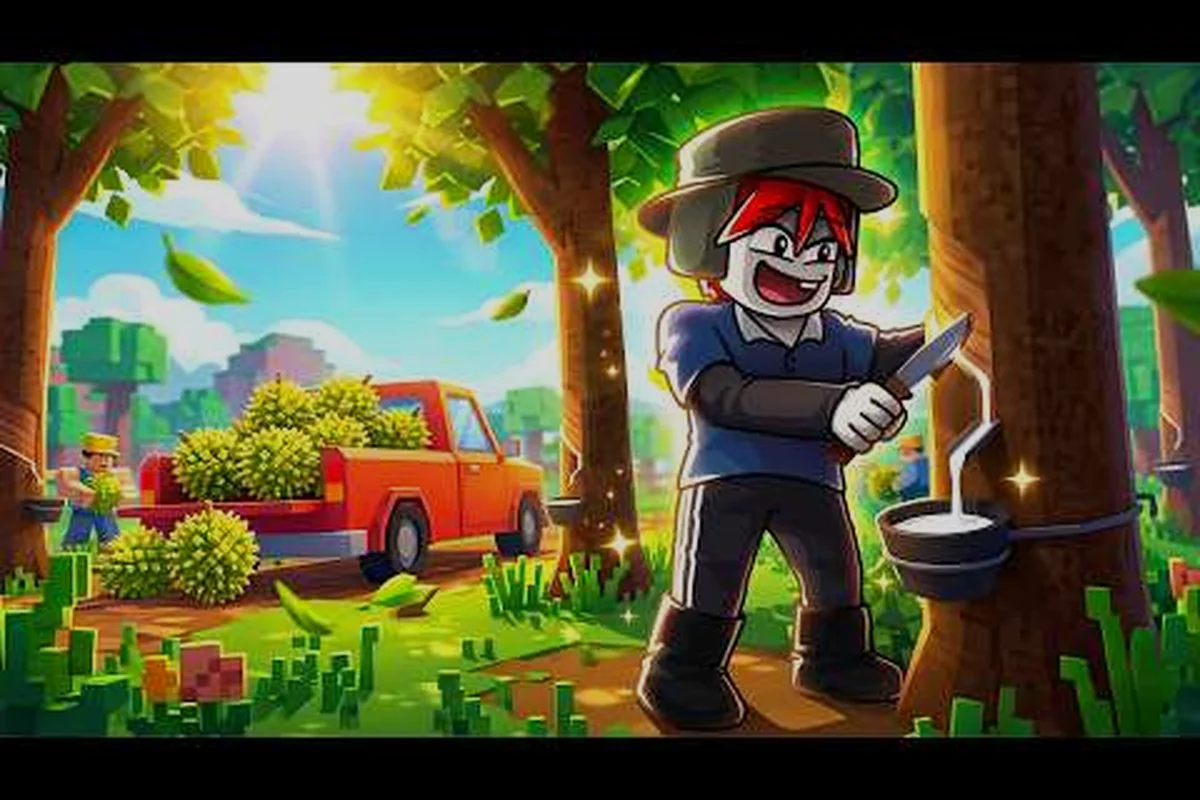
To plant durian trees efficiently in Durian Garden, begin by obtaining a seed from the seed guide and clearing an empty plot for it. Plant the seed, then apply Growth Boost so its growth cycle advances faster, reducing the wait before harvest. The key is to secure the seed first and keep the designated plot empty, since occupied soil cannot support the planting loop; using Growth Boost immediately after planting helps each tree reach maturity without unnecessary delay.
Durian Garden Planting Overview
The planting cycle in Durian Garden begins with seeds and ends with a load of ripe durians ready for sale. Each stage depends on the one before it, which makes seed management, plot placement, and growth timing the foundation of a productive farm.
A successful cycle follows four actions, but each action also affects the farm’s available capacity and cash flow. Start by checking whether the seed source and an empty farm plot are available, then plant the seed before using Growth Boost; otherwise, a wasted item or occupied plot can interrupt the cycle. The table below separates the four stages by required action, main result, and common mistake, making it easier to identify where a planting run is slowing down.
-
Acquire seeds from the game’s seed source.
-
Place the seed in an available farm plot.
-
Apply Growth Boost while the tree develops.
-
Harvest ripe fruit, load the truck, and sell the load for cash.
This is the core loop described in community planting footage from iRON GAMING’s Durian Garden video. The same footage shows why Growth Boost matters: it compresses the waiting period so more planting and harvesting cycles can fit into one session.
| Planting stage | Required action | Main result | Common mistake |
|---|---|---|---|
| Seed acquisition | Obtain a seed | Planting material | Using an item that is not a seed |
| Plot placement | Plant on an empty plot | A new tree begins growing | Placing an item on an occupied plot |
| Growth management | Use Growth Boost | Faster progress toward harvest | Applying boosts with no strategic reason |
| Harvest and sale | Collect ripe fruit and load the truck | Cash for upgrades | Trying to load fruit before it ripens |
Understanding these stages is important because planting mistakes consume both space and time. The beginner guide to Durian Garden can help with the controls and early-game economy, while this guide focuses on developing a repeatable planting method.
Durian Garden Seeds and Plot Setup
Seeds are the starting resource for every tree, so learning where they come from and how to use them is the first part of the planting process. A seed is useful only when it can reach an empty plot, and the quality of your setup determines how easily you can repeat that action during a busy harvest window.
Finding usable seeds
Players begin by checking the seed source available in the game. The important distinction is between the seed-giving action and the resulting item: the source provides a seed, which must then be planted on a valid plot. Based on community reports, players commonly gather seeds, equip them, and interact with an empty plot to create a tree.
The practical sequence depends on distinguishing the seed-giving action from the seed item itself: the source action creates a usable seed, but that seed only becomes a planted tree when it is equipped and used on an empty farm plot. This separation matters in Durian Garden because checking a source or receiving a seed does not automatically advance tree growth; for example, a player may obtain a durian seed, equip it, and then need to interact with the correct empty plot to trigger the planting stage.
-
Collect a seed from the available source.
-
Equip the seed or select it from the inventory.
-
Locate an empty plot on the farm.
-
Interact with that plot to plant the tree.
-
Confirm that the planted tree has begun growing.
The Durian Garden seed guide centers on keeping that sequence clear: collect first, equip second, and plant third. This order prevents a common early-game problem where a player selects a tool, searches for seeds, or approaches a tree without understanding which interaction creates the next growth stage.
Choosing the right plot
An empty plot is the required destination for a new seed. A good starting layout keeps most trees within easy reach of the truck and leaves open plots available for later expansion. This matters because harvesting does not end when fruit ripens; the fruit still needs to be collected, carried to the truck, loaded, and sold.
| Plot consideration | Better choice | Why it helps |
|---|---|---|
| Distance to truck | A nearby plot | Shortens each harvest trip |
| Spacing | Leave room to move | Reduces missed interactions and awkward routes |
| Expansion | Keep some plots open | Makes it easier to plant as seeds arrive |
| Tree placement | Group active trees | Keeps growth checks and harvesting efficient |
| Mutated trees | Keep visible | Makes unusual fruit easier to notice at harvest |
Avoid filling every visible square before establishing a working path. Room around the trees saves time later, especially after several trees mature at once. The farming loop is shortest when the path from tree to truck is direct, because a stalled loading step can delay the next round of planting.
Durian Garden Planting Steps and Growth Boosts
Once seeds and empty plots are ready, planting becomes a short interaction, but the next decision determines whether you wait for normal growth or spend resources to move faster. Growth Boost is useful because it shortens the wait, but using it at the right moment creates the best cycle.
Planting a tree step by step
Start with an empty plot and the seed equipped. Approach the soil, activate the planting interaction, and wait for the tree to appear. Confirm that the plot has changed from bare ground to a growing tree before moving on. This visual check prevents repeated interactions and makes it easier to identify any plot that failed to accept the seed.
After planting, the tree progresses through growth stages. Players who want more detail about each visual change can consult the growth stages and harvesting guide, which covers the transition from a planted tree to harvestable fruit.
| Stage | What you do | Decision point |
|---|---|---|
| Before planting | Gather and equip a seed | Plant only with a valid seed |
| Planting | Interact with an empty plot | Verify that the tree appears |
| Early growth | Monitor the tree | Decide whether to spend a boost |
| Maturation | Continue growth or accelerate it | Prepare for harvest timing |
| Ripe fruit | Collect the fruit | Load only ripe durians |
| Sale | Fill the truck and sell | Reinvest proceeds in the farm |
Applying Growth Boost
Growth Boost reduces the time needed for a tree to reach harvest, allowing more complete farming cycles in a session. That makes it especially valuable when you have several seeds but limited attention, because boosted trees can mature together and create a predictable harvest window.
Players seeking ways to improve speed can follow the guide on how to boost growth in Durian Garden to compare early acceleration, timed maturation, and batch harvesting. These approaches serve different farm conditions and should guide when you use a boost rather than whether a boost exists.
| Strategy | Best situation | Advantage | Limitation |
|---|---|---|---|
| Immediate boost | Several new seeds are waiting | Maximizes early output | Uses the resource sooner |
| Timed boost | Fruit would otherwise mature late | Targets the slowest stage | Requires stage monitoring |
| Batch boosting | Many trees are nearly ready | Aligns the harvest | Can overload the truck |
| Saving boosts | Cash or progression is the priority | Preserves resources | Extends the planting cycle |
The practical rule is simple: use Growth Boost when waiting would block the next cycle. If trees are already close to ripe, a boost may provide little value; if several plots are empty and the next harvest is distant, acceleration can turn unused space into productive output.
Durian Garden Growing Durians Efficiently
Growing durians is more than waiting for a timer. Seed supply, tree spacing, boost timing, and harvest readiness must work together. A farm can have many trees yet remain inefficient if the player constantly crosses the plot, misses ripe fruit, or lacks room to unload the truck.
Fill Empty Plots in a Fixed Sequence
A queue prevents random interruptions. Start by identifying empty plots, collect enough seeds to fill them, and plant in a consistent order. Then decide which trees need Growth Boost and when. This makes the farming loop easier to manage and reduces the chance that new seeds remain unused in the inventory.
A practical queue includes three levels of priority: harvest-ready trees, the next batch that needs preparing, and slower-growing trees whose Growth Boost can wait. For example, if two trees are nearly ripe and a third is still early, harvest and boost the mature pair first, then keep the third tree supplied with the next available seeds. This order preserves the truck’s flow while preventing a tree from occupying a plot longer than necessary.
-
Ready first: Plant and boost trees that should ripen earliest.
-
Next in line: Prepare the following group so the truck is never empty.
-
Later growth: Reserve boosts for trees that would otherwise delay the schedule.
Community gameplay observations support this pattern. Players who keep a direct route between trees and the truck report faster loading during busy harvests. The route does not need to be perfectly symmetrical; it simply needs enough open space to move without obstruction.
Match boosts to available resources
Growth Boost creates more harvest opportunities, but harvesting creates a new requirement: somewhere to put the fruit. Before accelerating several trees, check whether the truck has enough capacity for the expected load. Otherwise, the extra growth may produce ripe fruit that cannot be sold immediately.
This is also where reinvestment decisions begin. Sale income can fund more land, upgrades, or additional plots, but spending every coin immediately can leave you without growth resources. The money guide for Durian Garden explains how to balance farm income with expansion, while the planting strategy should preserve enough capital for the next seed-to-harvest cycle.
Watch for mutations
Not every fruit follows the standard value path. Community planting notes mention checking for mutations at harvest, and rare varieties can provide a different reward than ordinary durians. The diamond and rare durian mutation guide details those special outcomes and the conditions players should inspect before selling a load.
Keep this rule in mind: a tree may be ready for harvest before the fruit itself is ready to load. Inspect the collected fruit, separate any unusual result, and load only ripe produce. A mutation can otherwise disappear into a mixed truck load without receiving the attention it deserves.
Durian Garden Planting Strategies by Farm Stage
Early farms should prioritize seed access and compact planting layouts, established farms can expand toward more durian trees per plot, and high-output farms benefit from spacing trees around growth boosts to speed harvesting. The underlying planting mechanics stay the same, but income changes the best seed allocation: for example, once steady earnings cover seed costs, spending on multiple tree types reduces the risk of relying on a single slow-growing durian while preserving space for profitable growth boosts.
Early-game planting
In the early game, the priority is learning the complete loop rather than maximizing the number of planted trees. Acquire a small number of seeds, plant them on easy-to-reach plots, and use one Growth Boost where it will shorten the first meaningful wait. The goal is to confirm that you can grow, harvest, load, and sell without creating an accidental stockpile of unusable fruit.
Early players should also avoid spending heavily on expansion before understanding the truck routine. More trees can increase visible activity, but they do not create income unless ripe fruit reaches the truck. A smaller, repeatable cycle is more valuable than a large collection of immature trees.
Mid-game expansion
As the farm expands, the seed queue becomes more important. Plant several trees together, check them at regular intervals, and use Growth Boost to prevent one slow tree from holding back the entire schedule. Grouping the earliest trees near the truck reduces repeated travel and makes harvest windows easier to manage.
| Farm stage | Seed priority | Growth Boost priority | Layout priority |
|---|---|---|---|
| Early game | Learn a small, reliable cycle | Use selectively | Keep trees and truck close |
| Mid game | Fill plots consistently | Synchronize nearby groups | Create a direct collection route |
| Late game | Expand high-value production | Match boosts to harvest capacity | Separate routes or loading routines |
| Large farms | Maintain steady seed supply | Forecast each harvest wave | Preserve open expansion space |
Late-game and high-output farms
At a high-output level, the limiting factor may be harvesting capacity rather than seed availability. More accelerated trees create more ripe fruit, and the player must have enough time to collect it, load it, and move to the next group. Use Growth Boost in waves that fit your harvesting routine rather than applying it indiscriminately.
Community data and gameplay reports also point toward a compact layout as a practical advantage. The source data for this guide listed roughly 9.4 million visits, 9,721 favorites, and an 8-player server limit as of November 1, 2026. These figures describe the platform presence of the game at that time, not a guaranteed farming benefit. They do show that multiplayer servers are active, which can make short, efficient planting routines valuable when the session may be shared.
Common Durian Garden Planting Mistakes
Most planting problems come from a few repeated mistakes: planting with the wrong item, overlooking an occupied plot, boosting too late, or loading fruit before it is ready. Identifying each failure makes recovery faster and prevents wasted seeds. For example, place a seed only in an empty garden plot, since using the wrong item can leave the plot unchanged and consume a valuable planting opportunity. Apply a growth boost before the crop reaches its final stage; a late boost may miss the planting window and delay harvesting. Likewise, load fruit only after the durian is fully mature, because an immature load can fail to produce a saleable harvest. Checking the plot state and fruit readiness before each action keeps the durian garden cycle moving without unnecessary seed loss.
Wrong item equipped
Check the selected inventory item before approaching an empty plot. If the interaction does not create a tree, the cause may be a tool or another unrelated item rather than a seed. Equip the seed and repeat the interaction on the same plot.
Trees planted too far from the truck
A longer route looks efficient on a map but can waste time during each harvest. Place early trees close to the loading route, then reorganize when you understand which paths you use most often. The best arrangement is the one you can traverse consistently without blocked movement.
Growth Boost used at the wrong moment
Using a boost too early can consume a resource before you need acceleration, while using it at the last moment may leave little benefit. Compare the tree’s current stage with the time available in your session. Boost the tree whose natural harvest would create the longest delay.
| Mistake | Early sign | Correction |
|---|---|---|
| Wrong item equipped | Plot remains empty | Equip a valid seed and interact again |
| Occupied plot selected | Interaction fails without planting | Find an empty soil square |
| Boost applied late | Tree remains nearly unchanged | Accelerate before the next harvest wave |
| Premature loading | Fruit cannot be loaded | Wait until the fruit is ripe |
| Unused seeds in inventory | Empty plots remain available | Plant during the next queue cycle |
| Route congestion | Harvesting slows near the truck | Rearrange trees and maintain open paths |
A quick post-planting audit keeps the farm stable. Confirm that every tree has a visible stage, every ripe tree is accessible, the truck has room for the next load, and the inventory still contains a reasonable seed reserve. These checks take less time than rebuilding a neglected planting queue.
Frequently Asked Questions
Where do players obtain seeds in Durian Garden?
Players obtain seeds from the game’s seed source, collect them, and equip them before interacting with an empty plot. Keep the seeds in your inventory until you are ready to plant. If an interaction fails, check the equipped item and make sure the destination is unoccupied.
Can several seeds be planted in the same plot?
No. Each new tree requires an empty farm plot because the planting action changes that plot from bare soil into a growing tree. Plant one seed per plot, and use the available spaces carefully. As your farm expands, keep enough open land for additional trees and a clear route to the truck.
When should Growth Boost be used on a new tree?
Use Growth Boost when a tree’s normal waiting time would delay your next harvest cycle. It works especially well when several trees are developing together and you want them ready within a manageable window. Avoid spending a boost on a nearly ripe tree when another planted tree needs more acceleration.
Does planting close to the truck improve farming speed?
Yes. A short route between trees and the truck reduces travel during each harvest and makes loading smoother. Group early trees close together without blocking movement, and keep the truck route clear. Efficient spacing is especially useful when several trees ripen at once.
Should every seed be planted immediately?
Not always. Plant seeds when you have open plots, enough time for growth, and truck capacity for the expected harvest. Holding a seed briefly can prevent an overcrowded farm, while planting immediately can create a long idle period if Growth Boost resources are limited.
The planting formula in Durian Garden is straightforward: collect a seed, use an empty plot, apply Growth Boost when timing matters, and harvest only when fruit is ripe. Master that sequence, keep the route to the truck clear, and reinvest the resulting cash without sacrificing the resources needed for the next planting cycle.