
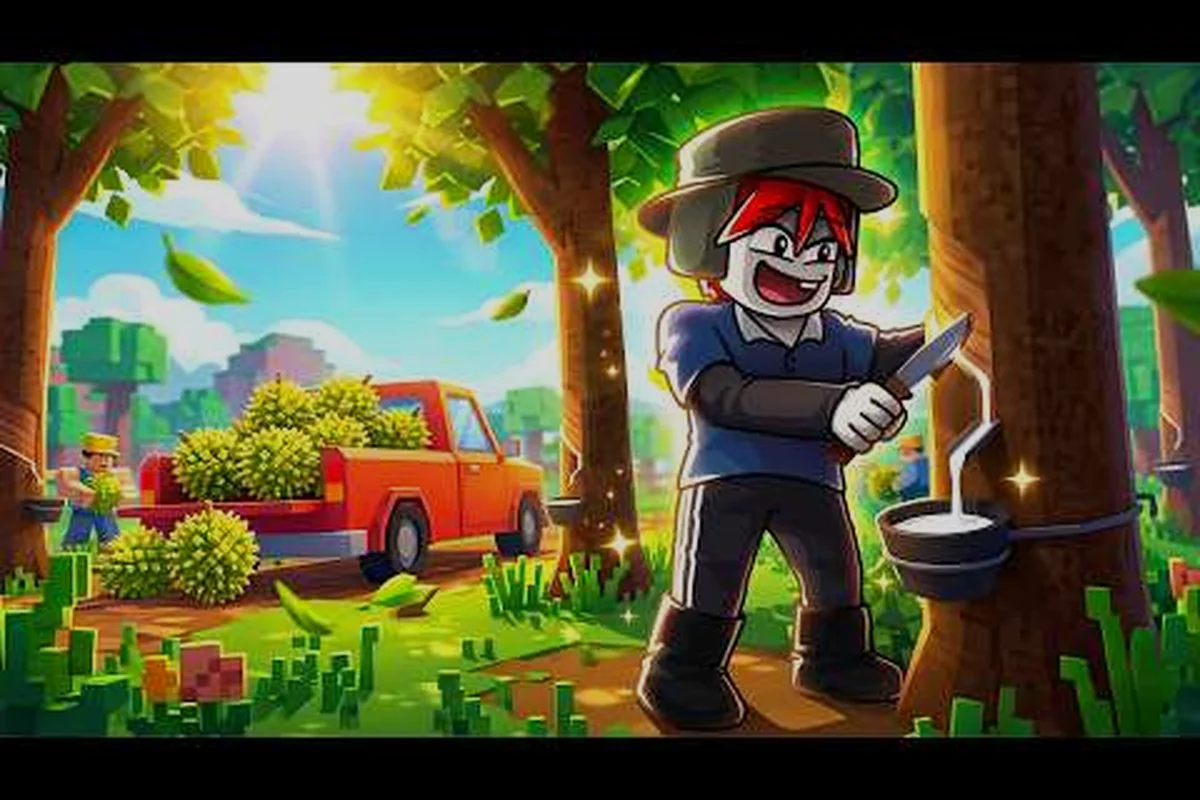
In Durian Garden, efficient farming starts with planting speed and synchronized harvesting: a durian tree that matures while you collect earlier crops can begin another growth cycle instead of sitting idle. For example, stagger a fast row for quick harvests with slower high-yield trees, then plant the next batch as soon as a tree is cleared. This timing shortens the gap between planting, harvest, and sale, while using fewer wasted harvest actions and getting produce to market before its value declines. Understanding planting speed, harvest timing, and sale value is the core of the planting-to-truck loop and the best way to increase cash flow per session.
Durian Garden Timing and Route Planning for Farm Runs
Durian Garden is a Roblox farming tycoon built around a short production cycle: plant a tree, accelerate its growth, harvest ripe fruit, load the truck, and sell the load for cash. The loop sounds simple, but good farming depends on timing and route planning rather than repeatedly pressing the same buttons. This guide explains how to keep every cycle moving without wasting a boosted tree or carrying fruit farther than necessary.
The clearest way to understand durian garden gameplay mechanics is to separate production from collection. Planting starts the timer, Growth Boost reduces the waiting period, harvesting removes ripe fruit, and the truck converts that harvest into money. Each stage should finish before you begin the next one, otherwise the cycle loses time even when the crop itself is growing normally.
The Core Production Loop
The verified gameplay loop reported in the PRIMKUNG farming walkthrough follows six consecutive actions that form one continuous durian-farming cycle: planting begins the growth timer, Growth Boost shortens the remaining wait, inspection confirms ripeness, harvesting produces inventory, loading creates a truck delivery, and selling converts that delivery into cash. The cause-and-effect matters: delaying Growth Boost can push harvest readiness later in the current cycle, while leaving ripe trees unharvested keeps available fruit from entering the sellable inventory. The table below breaks each stage into its player action, practical benefit, and common mistake, making it easier to identify where the core production loop is slowing down.
| Stage | Player action | Main benefit | Common mistake |
|---|---|---|---|
| Plant | Place a seed in an open plot | Starts the growth timer | Planting without checking nearby capacity |
| Boost | Apply Growth Boost to a growing tree | Shortens the wait before harvest | Boosting too late to change the current cycle |
| Inspect | Check the tree for ripe fruit | Identifies the correct harvest moment | Harvesting before the fruit is ready |
| Harvest | Collect the ripe durians | Adds sellable fruit to the inventory | Leaving ripe trees unattended |
| Load | Put harvested fruit on the truck | Prepares the delivery | Making multiple trips from distant plots |
| Sell | Deliver the truck load for cash | Funds land, upgrades, and expansion | Selling before the load is complete |
Treat this sequence as a pipeline rather than six unrelated chores. Planting creates future work, while boosting accelerates it; harvesting creates cargo, while loading converts that cargo into a sale. If one stage is neglected, the entire chain slows down.
What Counts as an Efficient Cycle?
An efficient cycle is not simply the fastest harvest. It is the amount of useful farming completed before the player has to wait or walk unnecessarily. Two players can harvest the same number of fruit, but one may sell sooner because their trees are organized, their boosts are timed well, and their truck route is short.
Community-reported server data also suggests Durian Garden supports up to eight players per server. That makes teamwork possible, although it does not mean everyone should perform the same task. One player can handle boosting and harvest checks while another collects fruit and loads the truck. Clear roles prevent duplicated effort and keep the production line active.
The first-hour progression overview is useful for learning where your current farm stands before you optimize the routine. Early on, learning the sequence matters more than maximizing income; once the basics are automatic, you can shorten travel and coordinate multiple trees with confidence.
Planting Speed and Growth Boost Timing
Planting speed is not just about how quickly you place seeds. It also includes how quickly the next tree becomes ready, how efficiently you spend Growth Boost, and how soon ripe fruit reaches the truck. Improving this part of durian garden gameplay mechanics creates more harvests from the same area without requiring a larger plot.
The most important rule is to boost while a tree is still growing. Applying a boost after the fruit becomes ready does not accelerate the completed wait, so the action provides no benefit to that harvest. Players who check trees constantly and boost as soon as they are planted can keep their active plots moving toward completion.
Planting and Boosting Priority
When several plots are available, plant and boost in a deliberate order. Start with the tree closest to the route or the one closest to becoming harvest-ready. This creates a predictable sequence of pickups and prevents a group of mature trees from becoming ready at once.
| Farm state | Recommended action | Why it works |
|---|---|---|
| Many empty plots | Plant and boost new trees | Uses the full plot area instead of delaying expansion |
| One tree nearly mature | Check it closely | Prevents a ready tree from being overlooked |
| Several young trees | Apply available boosts | Shortens upcoming waiting periods |
| Multiple ripe trees | Harvest and load immediately | Converts fruit into cash before the truck leaves |
| Truck partly loaded | Finish the load before another long trip | Avoids restarting travel for a partial delivery |
This priority system prevents a common mistake: focusing entirely on planting new seeds while already mature trees remain uncollected. Capacity is useful only when harvested fruit can be converted into money and reinvested. The broader mechanics of planting and harvesting are covered in the fruit-farming guide.
Planting Speed Checklist
Before starting another cycle, confirm that the available space is active, newly planted trees have been boosted, mature fruit has been collected, and the truck contains no overlooked harvest. These checks should take seconds and reveal whether your farm is producing continuously or merely reacting to prompts.
A useful Plant–Boost–Check–Harvest routine keeps attention moving in the right order. Plant the next available tree, apply Growth Boost while it is young, check the progress marker, and harvest only when ripe. Repeating that sequence prevents idle plots and makes the best use of every growth accelerator.
Harvesting, Mutation Checks, and Truck Loading
Harvesting is the point where growth becomes inventory. Durian Garden gameplay mechanics encourage players to check for mutations at harvest, which means the reward may depend on more than simply collecting the first ripe fruit. A careful harvest check is therefore worth a few seconds, especially when a tree looks unusually valuable.
A community walkthrough describes the practical sequence as planting seeds, applying Growth Boost, checking for mutations, harvesting ripe durians, loading the truck, and selling the load. That sequence matters because a mutation can affect the value of what you collect, while an unripe or overlooked fruit can reduce the efficiency of the sale.
What to Check Before Harvesting
Look at the fruit state and any mutation prompt presented by the game. The available data confirms that mutation checks are part of the harvest process, but it does not provide a reliable mutation table or fixed bonus percentage. Avoid inventing exact values; those numbers may vary by version or depend on in-game conditions.
| Check | What it tells you | Action |
|---|---|---|
| Fruit color or state | Whether the fruit is ripe | Harvest only when the game indicates readiness |
| Mutation prompt | Whether the crop has a special variant | Review the prompt before collecting |
| Tree position | How far the crop is from the truck | Harvest the nearest mature tree first |
| Truck space | Whether another fruit can be loaded | Stop collecting if the truck is full |
| Cash total | Whether the current cycle produced a gain | Compare the sale against expenses and reinvestment |
Loading is just as important as harvesting. Ripe fruit becomes sellable revenue only after it reaches the truck and the delivery is completed. The sale process itself is explained in the selling mechanics guide, including how the final price is determined.
Route Design for Faster Collections
Keep the route between trees and truck short. Player-reported farm notes specifically highlight layout as a reason to keep harvest loading fast instead of stalling the next planting cycle. Even a modest reduction in travel can compound when it is repeated across many trees and several deliveries.
A practical route follows three rules: space mature durian trees into a compact harvest cluster near the truck, keep each planting row connected to a visible travel lane, and make every return trip useful. For example, grouping four nearby mature trees into one collection pocket lets the player carry fruit through a shorter route, inspect two young trees on the way back, and apply a growth boost before the next planting cycle. This layout reduces idle travel, supports faster harvesting and planting, and turns route design into a repeatable farming mechanic rather than a cosmetic map choice.
-
Load nearest first: Collect the closest mature trees before crossing the farm.
-
Carry in one direction: Avoid zigzag movement between plots and the truck.
-
Return through active rows: Use the return walk to inspect young trees and apply boosts.
This arrangement turns travel into productive time. The player moves toward the truck with fruit, then uses the reverse route to check growth progress. The result is not merely better farming tips; it is a layout that supports the core gameplay loop from beginning to end.
Selling Farm Output and Reinvesting Profits
Selling is the financial endpoint of every farming cycle, but good players use that income to make the next cycle faster. Cash can fund additional land, farming upgrades, or a larger production setup. The right reinvestment depends on your current bottleneck rather than on a universal upgrade order.
The verified video shows profits being reinvested into land, upgrades, and bigger plots, which supports a clear progression loop: earn from repeated harvests, then spend the proceeds on whichever resource currently caps your clean cycles. For example, if planting speed prevents you from harvesting before decay or reset timers, prioritize farming upgrades; if output per plot is the limit, expand land or production capacity instead. This makes reinvestment a bottleneck-driven farming strategy rather than a fixed upgrade order.
Choosing the Next Investment
If you constantly run out of empty plots, acquire more usable land. If the farm produces faster than you can collect, improve the harvesting route or purchase relevant capacity upgrades. If the truck becomes the limiting factor, investigate truck-related improvements before expanding every crop.
| Current bottleneck | Symptom | Best reinvestment direction |
|---|---|---|
| Limited growing space | New trees cannot be planted quickly | Expand usable plots |
| Slow tree development | Empty land is occupied but trees wait too long | Prioritize growth-related upgrades |
| Long collection route | Mature trees remain beside the truck | Rearrange layout or add movement improvements |
| Limited carrying capacity | Harvested fruit cannot be loaded | Improve truck or loading capacity |
| Low starting cash | No upgrade can be purchased after sales | Repeat compact cycles before expanding |
The upgrade-priority guide provides a more detailed framework for deciding which farm improvements deserve priority. The key principle is to reinvest in the stage that currently prevents the next harvest, rather than making disconnected purchases.
Track the Cycle, Not Just the Balance
A large cash total can hide a weak routine. Track how many completed deliveries you make in a session, how often a planted tree receives its boost, and how much fruit is waiting when you arrive at the truck. These simple measurements reveal whether your efficiency is improving.
| Metric | What good performance looks like | Why it matters |
|---|---|---|
| Completed sales per session | Gradually increases | Shows that more cycles finish |
| Ready trees left unharvested | Rare after each route check | Prevents crop loss from inattention |
| Boosted trees per planting | Nearly every growing tree | Reduces time spent waiting |
| Distance to truck | Shortens after layout changes | Supports faster loading |
| Cash spent on improvements | Produces a visible cycle gain | Confirms productive reinvestment |
Record these figures after at least three farming sessions instead of judging performance from one sale. For example, if completed sales per session rise from 8 to 12 while ready trees left unharvested remain near zero, your route and harvesting routine are improving together. A temporary cash spike may come from mutation luck or one unusually profitable planting, whereas a repeated pattern across sessions identifies the operation that needs attention, such as low boosted-tree rates or excessive distance to the truck.
Advanced Farming Routine and Team Coordination
A reliable routine becomes more valuable as your farm expands. Advanced players in Durian Garden can divide the work, sequence their actions, and use route planning to create a continuous stream of ripe fruit. This is where durian garden farming tips evolve from basic instructions into a repeatable production system.
The same production rule applies whether you work alone or with others: every action should move the farm toward the next sale. Assigning two people to the same task when only one is needed creates delay, while leaving the truck unhandled can prevent collected fruit from becoming cash.
Solo Play Routine
A solo player should minimize idle transitions. Work in one plot area, collect nearby ripe trees, then load the truck before moving to another distant section. On the way, inspect young trees and apply boosts. This approach keeps the player’s attention aligned with the farm’s growth state.
-
Plant the next tree in an open, convenient plot.
-
Apply Growth Boost to every newly planted tree.
-
Inspect the nearest tree that may soon be ready.
-
Harvest ripe fruit and check for mutations.
-
Load the truck during the same trip.
-
Complete the sale and reinvest the proceeds.
Multiplayer Division of Labor
With up to eight players per server, a larger group can divide the loop into specialized roles. For example, one player can focus on planting and applying Growth Boost while another harvests ripe fruit and clears the route, then a loader transfers the fruit to the truck for delivery and reinvestment. The exact team size and communication tools can change, so treat these assignments as practical recommendations rather than required roles; smaller farms can combine several duties without delaying collection or loading.
| Role | Primary responsibility | Secondary responsibility |
|---|---|---|
| Planter | Fill available plots | Report which trees need attention |
| Booster | Apply Growth Boost to young trees | Monitor mature trees |
| Harvester | Collect ripe fruit and review mutations | Keep nearby route clear |
| Loader | Place harvested fruit on the truck | Confirm the load is complete |
| Seller | Complete the delivery | Check revenue and choose reinvestment |
Two or three players can cover all roles in a small farm, while a larger group may assign narrow tasks. The critical point is to avoid everyone repeatedly harvesting the same tree or abandoning the truck during a productive window.
Handling More Than One Truckload
When your harvest exceeds one load, avoid random loading decisions. Fill the truck systematically, sell it, and then return to the nearest mature trees. If you want to learn broader progression before optimizing multiplayer, the server and joining overview provides useful context.
Before leaving for a sale, perform a Ready-Fruit Sweep: check the route once more, confirm no obvious ripe fruit remains near the truck, verify the load, and then depart. This small step can recover fruit that might otherwise remain unattended until after the sale.
Frequently Asked Questions
How do you grow durians faster in Durian Garden?
Plant trees in open plots and apply Growth Boost while they are still growing, because boosting a completed crop cannot shorten a wait that has already passed. Check mature trees frequently so the same area produces several harvests. Route planning also improves effective planting speed by reducing time spent walking between trees, boosts, and the truck.
What should you do after harvesting a durian tree?
Check the crop for a mutation prompt, collect all ripe fruit, and load it onto the truck promptly. Ripe fruit does not contribute to revenue until the delivery is completed. Reviewing the cash total after selling also helps you decide whether profit should go toward land, growth upgrades, or better collection capacity.
Is it better to plant many trees or focus on a few?
For a small farm, concentrating on several trees can make boosting and harvesting easier. As available land increases, a broader planting plan produces more potential fruit, provided the player can collect and load it consistently. The best setup is the largest number of trees your harvesting route and truck capacity can support without leaving ripe crops unattended.
How do team players improve farming speed in Durian Garden?
Assign different players to planting, boosting, harvesting, loading, and selling so that no stage remains unattended. One person may manage nearby trees while another completes the truck, which reduces idle movement. Because server capacity can reach eight players, clear responsibilities are especially useful once the group is large enough to cover the entire route.
How should early farming profits be used?
First resolve the clearest bottleneck. Buy more land when empty plots interrupt planting, seek growth improvements when trees wait too long, and improve truck capacity when harvests cannot be loaded. Reinvesting in the constraint that currently slows the loop usually produces a better result than spreading cash across several unrelated improvements at once.